

Gwadar ...
A Reawakening Paradise & the City
Destined to Golden Growth
Gwadar
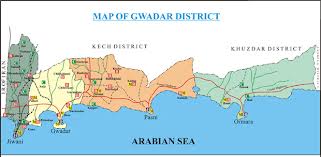
is a district along the sea in south of the Makran. The coastline of Gwadar
District is about 600 Kilometers long. Gwadar was notified as a District in
July, 1977 with its headquarter at Gwadar Town. Previously it used to be a part
of Makran District. Gwadar district is located from 25`-01` to 25`-45`
North latitudes and from 61`-37` to 65`-15` east longitudes. It is bounded on
the North by Kech and Awaran District. On the East by Lasbela District, on the
south by the Arabia Sea and on the West by Iran. Total area of the district is
12,637 square kilometers. The district comprises of Gwadar and Pasni
Sub-divisions
Gwadar
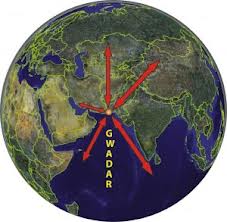
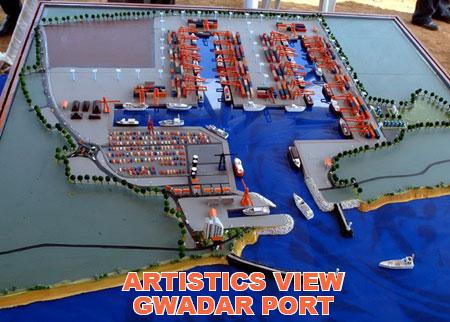
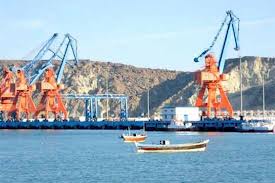
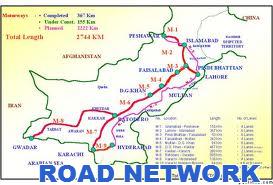
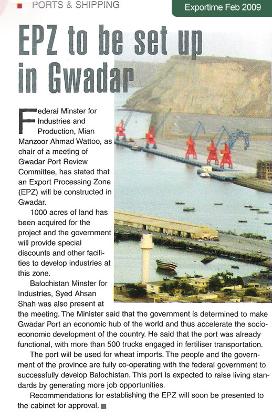
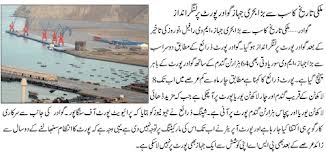
Port is located at the apex of the Arabian Sea and at the mouth of the
Persian Gulf. approximately 460 km (290 mi) west of
Karachi, 75 km (47 mi) east of Pakistan's border with
Iran and 380 km (240 mi) km northeast of the nearest point in
Oman across the Arabian Sea. It is situated on the eastern bay of a
natural hammerhead-shaped Peninsula protruding into the Arabian Sea
from the coastline. Gwadar Port is situated near the strategic Strait of
Hormuz and its busy trading and oil shipping lanes. The surrounding region
is home to around two-thirds of the world's oil reserves. It is also the
nearest warm-water seaport to the landlocked, but energy rich, Central Asian
Republics and landlocked Afghanistan.
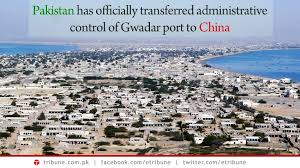
Gwadar-
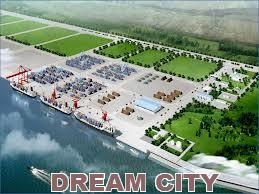
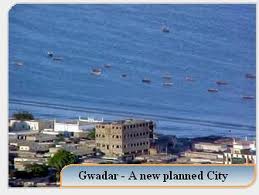
yesterday’s small fishing village has rapidly emerged as an international Deep
Seaport City today. It is a good move by the government to declare Gwadar a
Duty Free Port and free economic zone, keeping in view the significance of the
region. This has not only enhanced its commercial worth manifold, but has also
accelerated the pace of development to an incredible extent. By virtue of its
finest location, development projects, recreational programs and government’s
special attention, it will soon turn into a city that can be comparable with
cities like Singapore, Hong Kong and Dubai. Gwadar, the western port city of
Pakistan, has already got the attention of economic planners. It has an immense
strategic lure. It lies near the Straits of Hormuz, gateway to the Gulf through
which 40 percent of the world’s oil passes. The port also has a great
commercial attraction. It lies 1,250 miles from Xingjian, a landlocked western
province and latecomer to China’s economic boom.
Physical
Features / Topography
The
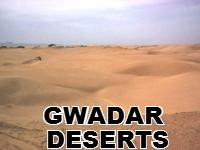
coastline of Gwadar District extends in an east-west direction and it is almost
entirely desert. The elevation of Makran coast range is upto about 1000 meters
above the sea level. In Gwadar District, soil is of two types: alluvial soil
and lithosols and rigosols. The valley of Dasht river in the western part of
the district and the Kulanch valley in the north consist of alluvial soil. The
mountainous area of the district is covered with lithosols and rigosols.
Limestone, shale and sandstone are the main rocks involved in the formation of
this area.
Rivers
and Streams
The
important rivers and streams in the district include Shadi Kaur, Swar and Dasth
river with its tributaries Nilag and Daddeh.
Climate
The climate of Gwadar, elevated at 0-300 meters above sea level,
is drying arid hot. It is placed in “warm summer and mild winter” temperature
region. The oceanic influence keeps the temperature lower than that in the
interior in summer and higher in winter. The uniformity of temperature is a
unique characteristic of the coastal region in Balochistan.